Non Projected Visual Materials
Visual materials are instructional media for teachers. These materials like charts, posters, pictures, flashcards, chalkboard, white board and PowerPoint presentations can enhance, engage and motivate learners. Visual materials can help explain lessons and activities as well as increase recall and retention. These materials are sensory images that support learning specially for the young learners that is the target audience of this lesson.
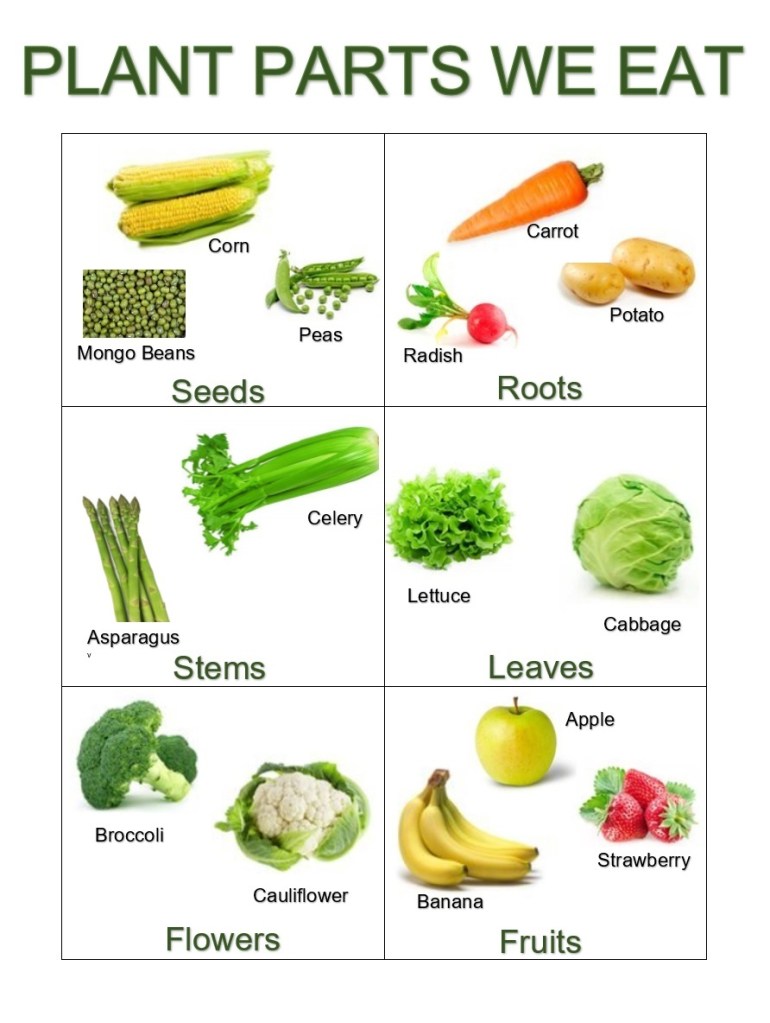
To enhance learning for the topic about plants and its different parts that we commonly eat, I developed a poster as support for the last topic of the plant themed lesson. Posters are type of non-projected visual material intended to catch the attention of the young learners to communicate that plants have different parts that are commonly use as food. The poster with a heading “Plant Parts We Eat” is a combination of images and words. It is arranged in a table form to separate the different plant parts and their examples. I use readable labels with big fonts for the box heading. The big fonts also reflect the words (seeds, roots, stem, leaves, flowers and fruits) which preschoolers have been learning for the entire plants lesson. The repetition of words in labels and discussion aids in comprehension, retention and recall.
Images of familiar plants that we eat are carefully selected and are very colorful. Below the images are the labels or names of the plants that help young learners increase their comprehension and vocabulary hence supporting early literacy skills development. Sizes of the pictures and words are big enough for the group of learners to view either as the teacher holds it or when placed on the wall.
Non projected visual aid like a poster also provides continuity of the lesson as it will be place on the wall for the duration of the class that young learners can look, check and use as reference as they explore the plants on display in the sensory table. The poster will be in display for the duration of the plant themed lesson week.
Like other instructional media, careful selection of content for the non- projected visual material to be used is important. The content should match the audience to be effective in supporting learning.
 Charry's Teaching Odyssey